Complete Montenegro summer guide for Estonians: Kotor fortress hikes, Sveti Stefan beaches, Lake Skadar tours, and Durmitor peaks. Book your Adriatic adventure!
Montenegro summer trip: beaches, mountains and medieval magic
Why Montenegro deserves a summer trip
Montenegro packs extraordinary diversity into roughly 13,812 square kilometres—making it smaller than Estonia yet brimming with dramatic contrasts. This compact Balkan gem delivers stunning Adriatic coastline, alpine peaks, medieval walled towns, and pristine lakes—all within easy driving distance.
For first-time visitors, seven to ten days provides ample time to experience Montenegro’s highlights without feeling rushed. You can comfortably combine lazy beach days in Budva, mountain hikes in Durmitor National Park, and cultural exploration in Kotor’s UNESCO-protected Old Town. The country’s small size means you’ll spend more time enjoying sights and less time travelling between them.
Estonians particularly appreciate Montenegro’s Mediterranean climate during summer months. June and July offer the ideal combination of warm, dry weather perfect for both coastal relaxation and mountain exploration—whilst coastal Kotor reaches 30°C, inland Cetinje averages a pleasant 22°C.
Montenegro’s capitals: Podgorica & Cetinje
Montenegro presents an unusual situation—it maintains two capitals serving different functions. Podgorica serves as the administrative capital, housing government ministries and embassies, whilst Cetinje holds the title of Old Royal Capital, preserving Montenegro’s historical and cultural heart.
Podgorica: the modern capital
Most Estonian visitors arrive via Podgorica Airport (TGD), making the capital an inevitable starting point. Whilst Podgorica lacks the medieval charm of coastal towns, it offers authentic Montenegrin urban life and serves as an excellent base for exploring nearby attractions.
A half-day itinerary suffices for new arrivals. Begin at the Millennium Bridge, Podgorica’s striking modern landmark spanning the Morača River. This cable-stayed bridge, completed in 2005, illuminates beautifully at dusk—making sunset the optimal time for photographs. The bridge symbolises Montenegro’s post-independence aspirations and provides a stark contrast to the country’s ancient fortifications.
From the bridge, stroll through Stara Varoš (Old Town), where Ottoman-era architecture mingles with café culture. The Turkish Clock Tower and Osmanagić Mosque offer glimpses into Podgorica’s five centuries under Ottoman rule. For accommodation, numerous mid-range hotels cluster near the city centre.
Cetinje: the old royal capital
Cetinje, nestled in a valley beneath Mount Lovćen, served as Montenegro’s capital from 1482 until 1946. This compact town preserves the nation’s cultural heritage through museums, monasteries, and elegant 19th-century architecture. The Cetinje Monastery, founded in 1485, houses precious religious relics including a fragment of the True Cross.
Allocate a full day for Cetinje combined with Lovćen National Park. The winding road up Mount Lovćen leads to the Njegoš Mausoleum, perched at 1,657 metres. After climbing 461 steps, visitors encounter panoramic views stretching from the Adriatic to Albania’s mountains. The mausoleum honours Petar II Petrović-Njegoš, Montenegro’s beloved 19th-century ruler, philosopher, and poet.
Coastal gems: old towns and iconic views
Montenegro’s Adriatic coastline delivers a spectacular 293-kilometre journey linking medieval walled towns, secluded coves, and the dramatic Bay of Kotor—often called Europe’s southernmost fjord. The coastal highway connecting Kotor, Budva, and Bar provides one of the Mediterranean’s most scenic drives.
Kotor Old Town: A medieval masterpiece
Kotor’s UNESCO-protected Old Town ranks amongst the Adriatic’s best-preserved medieval settlements. Venetian walls snake 4.5 kilometres up the mountainside, enclosing labyrinthine streets, hidden piazzas, and centuries-old churches.
The fortress hike offers Kotor’s quintessential experience. Start early—ideally by 7:00 AM before ticket booths open and heat intensifies. The 1,350 stone steps lead to San Giovanni Fortress at 280 metres elevation, requiring 45 minutes to one hour. Halfway up, the Church of Our Lady of Remedy provides a rest stop with spectacular views.
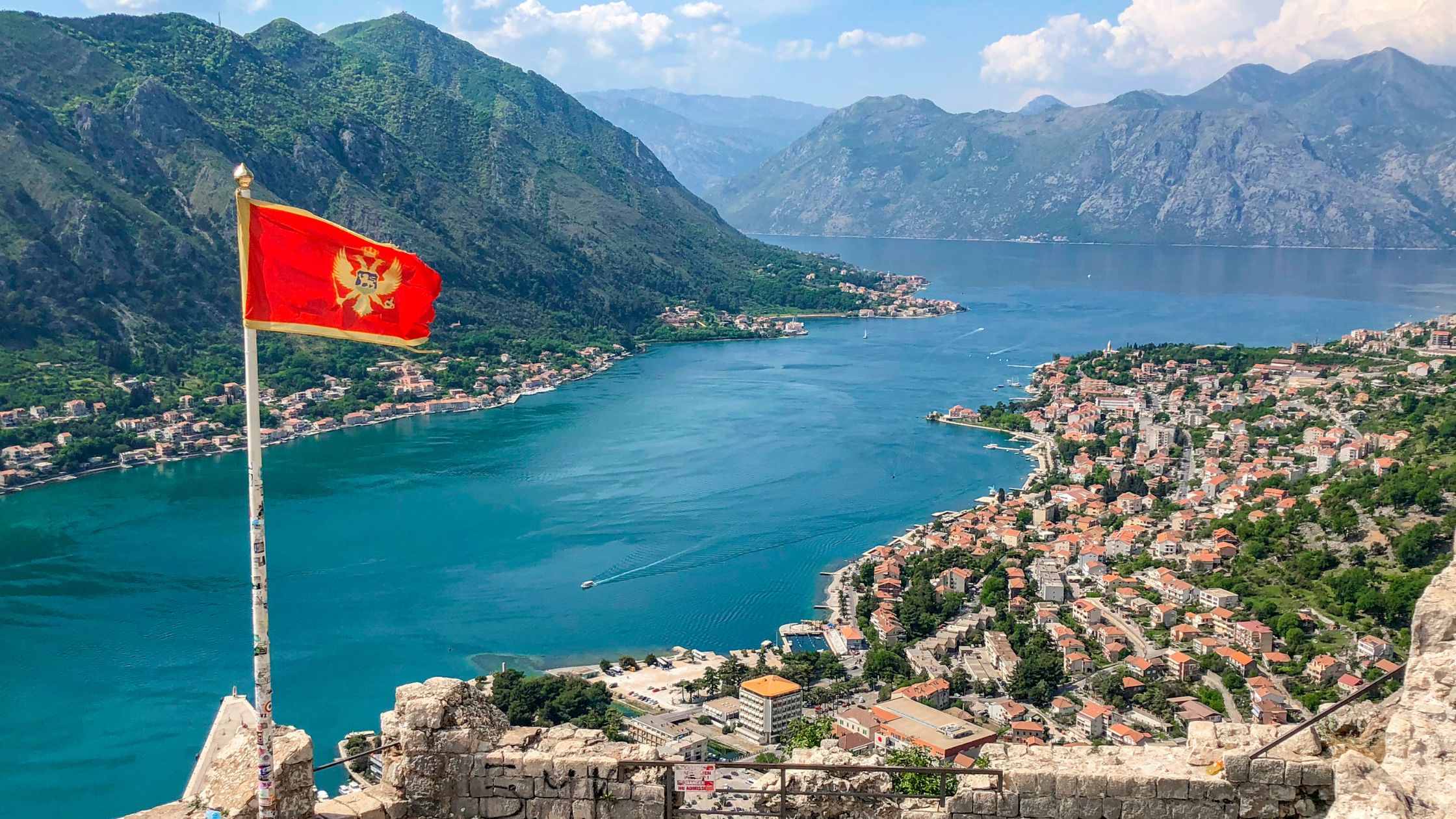
From the fortress summit, Kotor’s terracotta roofs spread below like a medieval tapestry, whilst the Bay of Kotor glistens between mountain walls. The entrance fee costs €8-15 depending on season. Alternatively, the free ‘Ladder of Kotor’ trail begins outside the Old Town walls, offering a more challenging but equally rewarding ascent through 72 switchbacks.
Within Kotor’s walls, prioritise these photo spots: the tiny Square of Arms with its Venetian clock tower, St. Tryphon’s Cathedral showcasing Romanesque architecture, and the Maritime Museum chronicling Kotor’s naval heritage. Book dinner inside the town walls at Galion or Cesarica for waterfront ambience—reservations essential during summer.
For accommodation, browse Kotor hotels on Booking.com where options range from boutique hotels within the Old Town to seaside apartments in nearby Dobrota offering better value.
Budva Old Town & Sveti Stefan
Budva, Montenegro’s tourism capital, balances medieval heritage with vibrant beach culture. The compact Old Town occupies a small peninsula, surrounded by Venetian walls and accessed through narrow gates. Visit during morning hours (8:00-10:00 AM) before cruise ship passengers and beach-goers overwhelm the cobblestone streets.
Budva’s Stari Grad (Old Town) showcases the Citadel fortress, now hosting summer concerts and art exhibitions, and several Orthodox churches including the distinctive St. John’s Church. The town beaches—Mogren, Slovenska, and Ričardova Glava—offer convenient swimming spots, though they pack densely during peak season.
Six kilometres southeast lies Montenegro’s postcard icon: Sveti Stefan. This fortified island village, connected to the mainland by a narrow causeway, transformed into an ultra-luxury Aman resort frequented by celebrities from Sophia Loren to Bobby Fischer during the 1970s. Whilst the island itself remains closed to non-guests (the resort has been closed since 2020 with no announced reopening), the views justify the visit.
For optimal photography, drive to the elevated viewpoint on the E65/80 coastal road between Budva and Petrovac. Sunset transforms Sveti Stefan into a golden silhouette against deep blue water. The Royal Walk path through Miločer Park connects Sveti Stefan to Pržno village, winding beneath Lebanese cedars and offering side views of the island plus access to the King’s and Queen’s beaches.
The public beach flanking Sveti Stefan’s causeway features distinctive pink-toned pebbles. Expect to pay €15-20 for umbrella and sunbed rental on the free public side; the exclusive resort beach charges €100+ for two loungers. Parking near Sveti Stefan costs €10-12 per hour during peak season—arrive early or use public transport from Budva.
Bar & Stari Bar
Bar, Montenegro’s primary port city, serves more as a transit hub than tourist destination. However, 4 kilometres inland, the ruins of Stari Bar (Old Bar) reward exploration. This abandoned medieval town, destroyed during the Montenegrin-Ottoman wars of 1878, sprawls across a hillside with over 240 structures including churches, mosques, and an aqueduct system.
Allocate a half-day for Stari Bar. The entrance fee costs €3. Wander the atmospheric ruins independently or hire a local guide at the entrance (€10-15) for historical context. The fortress walls provide views towards the Adriatic and Albania’s mountains.
Near Stari Bar stands the Old Olive Tree, estimated at over 2,000 years old—among Europe’s most ancient olive trees still producing fruit. The gnarled trunk reaches 10 metres circumference, a living connection to Roman times.
Lake Skadar National Park: wetland wilderness
Lake Skadar spans 370 square kilometres, making it the Balkans’ largest lake and one of Europe’s premier birdwatching destinations. Two-thirds lies within Montenegro, with Albania claiming the remainder. The lake’s fluctuating water levels create extensive wetlands supporting over 280 bird species, including the rare Dalmatian pelican.
Base yourself in Virpazar, a charming village on Lake Skadar’s northeastern shore. This former fishing settlement now caters to visitors with guesthouses, restaurants specialising in fresh lake fish (particularly carp prepared in various styles), and boat tour operators.
Book a boat tour through local operators in Virpazar (€15-25 per person for 2-3 hours). Tours typically navigate through water lily fields, visit abandoned island monasteries, and seek out bird colonies. The best birdwatching occurs April-May during nesting season and again September-October when migrating species pass through.
For panoramic lake views, drive to Pavlova Strana viewpoint above Virpazar. The steep, narrow road challenges nervous drivers but culminates in sweeping vistas across Lake Skadar’s island-dotted expanse towards Albanian mountains. Visit during late afternoon when sunlight angles create dramatic reflections.
Rent kayaks in Virpazar (€5 per hour) for independent exploration. Paddle towards the Serbian Orthodox monasteries of Beška and Moračnik, both accessible by water. The calm morning hours before winds pick up provide optimal kayaking conditions.
Sample local specialities at Konoba Badanj or Viranska Ada restaurants. Try ukljeva (small lake fish), served fried or grilled, and pair with local Vranac wine. Find accommodation in Virpazar on Booking.com, where family-run guesthouses offer lake views and home-cooked meals.
National parks & mountain adventures
Montenegro’s interior transforms dramatically from Mediterranean coast to Alpine highlands. Five national parks preserve pristine wilderness—Durmitor and Biogradska Gora ranking among Balkan Peninsula highlights for hiking, rafting, and mountain scenery.
Durmitor National Park & Black Lake
Durmitor National Park encompasses 390 square kilometres of dramatic karst peaks, glacial lakes, and deep canyons. The park’s highest summit, Bobotov Kuk, reaches 2,523 metres. Base yourself in Žabljak, Montenegro’s highest town at 1,456 metres elevation, offering numerous hotels, mountain lodges, and restaurants.
Black Lake (Crno Jezero), located 3 kilometres from Žabljak centre, provides Durmitor’s most accessible attraction. This glacial lake actually comprises two lakes—Big Lake and Small Lake—connected by a narrow channel. The flat 3.6-kilometre loop trail around Black Lake requires minimal fitness and delivers forest scenery, mountain reflections, and swimming opportunities.
Summer visitors (June-September) find the trail snow-free and wildflowers blooming. Arrive early morning or late afternoon to photograph the peaks mirrored in still water. Small lakeside cafés rent paddle boats (€5 per hour) for a different perspective.
Experienced hikers tackle Bobotov Kuk, an 8-10 hour return trek requiring proper mountain equipment, navigation skills, and stable weather. Less demanding options include the hike to Zminje Lake (5 hours return) or exploring the Ice Cave near Obla Glava peak—formations remain frozen year-round despite summer surface temperatures.
Book Žabljak accommodation on Booking.com, where mountain hotels and chalets provide comfortable bases for multi-day exploration. Winter transforms Žabljak into Montenegro’s premier ski resort.
Tara River Canyon: Europe’s deepest gorge
The Tara River carves Europe’s deepest canyon—1,300 metres at maximum depth—through Durmitor National Park. This emerald-green river, protected as a UNESCO World Heritage site, delivers some of Europe’s finest whitewater rafting through pristine wilderness largely inaccessible except by boat.
Multi-day rafting trips navigate 82 kilometres of canyon from Mojkovac to Šćepan Polje, camping on riverside beaches. Most visitors opt for day trips covering the canyon’s most scenic 18-kilometre section. Reputable operators include Encijan Eco Rafting and Rafting Montenegro—prices range €40-60 per person including equipment, guide, and lunch.
No previous rafting experience necessary, though participants should swim comfortably and maintain reasonable fitness. The season runs April-October, with May-June offering highest water levels and most challenging rapids. July-August provides warmer water and calmer conditions suitable for families.
Safety briefings cover paddling techniques, emergency procedures, and equipment usage. Guides navigate rapids whilst guests help paddle. Expect to get thoroughly wet—waterproof bags protect cameras and valuables.
Stop at Đurđevića Tara Bridge, an elegant concrete arch spanning 365 metres across the canyon at 172 metres height. Built in 1940, the bridge offers vertiginous views into the gorge. A zipline (€25) launches from the bridge, reaching speeds exceeding 100 km/h during the descent.
Ostrog Monastery: spiritual sanctuary
Ostrog Monastery clings impossibly to a vertical cliff face 900 metres above the Zeta Valley. Founded in the 17th century, this Serbian Orthodox monastery carved directly into limestone rock ranks among Montenegro’s most important pilgrimage sites, dedicated to Saint Basil of Ostrog.
Two monastery levels connect via a steep footpath through oak forest—allow 20-30 minutes walking between them. The Upper Monastery features cave churches adorned with frescoes, whilst Lower Monastery provides visitor facilities and the car park.
Visit early morning (7:00-9:00 AM) or late afternoon (5:00-7:00 PM) for quieter experiences. Weekends and religious holidays draw large crowds of pilgrims. Modest dress code applies: women should cover shoulders and wear long skirts; men need long trousers. Headscarves available at the entrance for women. Photography prohibited inside churches.
Many pilgrims walk the 5-kilometre path connecting the Upper and Lower monasteries, following ancient pilgrimage traditions. This trail through forest requires sturdy footwear but offers meditative solitude and views across the valley.
Ostrog lies 45 kilometres from Podgorica—easily reached as a day trip. No entrance fee, though donations welcomed. Small shop sells candles, icons, and religious items. Basic café serves coffee and simple meals. No accommodation at the monastery itself; nearest hotels in Nikšić or Danilovgrad.
Brief History: from Illyrians to independence
Understanding Montenegro’s complex history enriches visits to its castles, monasteries, and museums. This small nation’s strategic position between empires created a rich historical tapestry.
Illyrian tribes inhabited Montenegro from 1000 BC, establishing hilltop fortifications. Romans conquered the region in the 3rd century BC, incorporating it into the province of Dalmatia. The capital Doclea (near modern Podgorica) flourished as an important trading centre.
Following Rome’s fall, Slavic tribes settled the region during the 6th-7th centuries, introducing Orthodox Christianity. The medieval state of Zeta emerged under the Vojislavljević dynasty, later absorbed into the Serbian Empire. Montenegro’s name derives from ‘Crna Gora’ (Black Mountain), likely referring to the dark coniferous forests covering Mount Lovćen.
Ottoman period & independence struggles
The Ottoman Empire conquered much of the Balkans during the 15th century. Montenegro’s mountainous interior remained largely autonomous under Prince-Bishops (Vladikas), combining religious and political authority. The Petrović-Njegoš dynasty ruled from Cetinje for over 200 years, maintaining independence through diplomatic skill and mountain defensibility.
Montenegro gained international recognition as an independent principality in 1878 following the Russo-Turkish War. King Nikola I modernised the country, though poverty and emigration plagued the young nation.
World Wars & Yugoslav Era
During World War I, Montenegro allied with Serbia against Austria-Hungary. Montenegrin forces fought valiantly, particularly at the Battle of Mojkovac (January 1916), where outnumbered defenders held strategic positions long enough for Serbian forces to retreat through Albanian mountains. Austria-Hungary occupied Montenegro, and King Nikola fled to exile.
The 1918 Podgorica Assembly controversially voted to unite Montenegro with Serbia, creating the Kingdom of Serbs, Croats, and Slovenes (later Yugoslavia). Many Montenegrins opposed this decision, maintaining that it lacked legitimacy.
World War II brought brutal occupation. Partisan resistance fought Italian and German forces. At the 1943 AVNOJ (Anti-Fascist Council for the National Liberation of Yugoslavia) session in Jajce, Yugoslavia’s post-war federal structure took shape, with Montenegro designated as one of six republics within the new socialist federation.
Montenegro remained within Yugoslavia through its various iterations until 2006. Following the breakup of Yugoslavia and Yugoslav Wars of the 1990s, Montenegro initially maintained union with Serbia. A 2006 independence referendum narrowly passed (55.5%), leading to peaceful separation and recognition as Europe’s newest independent state.
Off the beaten track: hidden gems
Escaping tourist concentrations reveals Montenegro’s authentic character. These lesser-known destinations reward travellers seeking tranquillity and local culture.
Rijeka Crnojevića, a riverside village near Lake Skadar, showcases elegant stone bridges and Ottoman-era architecture. This former capital of Zeta state now slumbers peacefully—explore the 15th-century Obod Monastery ruins and enjoy fresh fish at riverside konobas (taverns).
Perast, a baroque jewel in the Bay of Kotor, limits tourist infrastructure, preserving its 17th-18th century ambience. Seventeen palaces and twelve churches crowd this compact settlement. Hire a taxi boat (€5 per person) to Our Lady of the Rocks, an artificial island hosting a blue-domed church built atop a sea reef.
Biogradska Gora National Park protects one of Europe’s last virgin forests. The easy loop trail around Biograd Lake traverses primeval beech and fir forest—some trees exceed 500 years old. Summer brings wildflowers and berries; autumn delivers spectacular foliage.
Morača Monastery, hidden in a dramatic canyon 60 kilometres north of Podgorica, dates from 1252. Well-preserved frescoes illustrate biblical scenes in vivid colours. Few tourists venture here, allowing contemplative visits. The resident monks welcome respectful visitors but photography inside the church prohibited.
Contact local guides through tourist information centres in Kotor or Podgorica for personalised monastery tours. Hidden chapels and hermitages dot Montenegro’s mountains—many accessible only on foot with local knowledge.
Practical information for visitors
Currency & money matters
Montenegro uses the euro (€) despite not being an EU member. This simplifies transactions for Estonian visitors. ATMs (bankomats) widely available in cities and tourist areas, though smaller villages may lack them—carry sufficient cash when venturing off main routes.
Credit cards accepted in hotels, restaurants, and larger shops. Smaller establishments, markets, and family-run konobas prefer cash. Tipping customary but not mandatory—round up bills or add 5-10% for excellent service.
Best time to visit
For Estonian summer holidays, June-September delivers optimal conditions. June and early July offer perfect weather before peak crowds. Sea temperatures reach comfortable 22-24°C. Mountain parks remain snow-free and hiking trails accessible.
Late July-August brings hottest temperatures (30-35°C on coast) and maximum crowds. Beach resorts fill with Serbian, Russian, and Western European tourists. Accommodation prices peak, and popular restaurants require advance booking. However, this period guarantees sunshine and warmest swimming.
September provides Estonia’s September offers Montenegro’s sweet spot—warm weather (25-28°C), calmer seas perfect for swimming, fewer tourists, and more affordable accommodation. The season extends into October when daytime temperatures remain pleasant (18-22°C) though some facilities begin closing for winter.
Avoid November-March unless skiing in Kolašin or Žabljak. Coastal areas turn quiet and cold, many hotels and restaurants close, whilst rain frequently disrupts travel plans.
Transportation
Renting a car provides maximum flexibility for exploring Montenegro’s diverse landscapes. International driving permits not required for Estonian citizens. Roads generally well-maintained along main routes, though mountain roads feature hairpin turns and steep gradients—drive cautiously.
Parking challenges arise in Kotor and Budva Old Towns during peak season. Public car parks charge €2-3 per hour. Arrive before 9:00 AM to secure spaces.
Public buses connect major towns reliably and cheaply. Podgorica-Kotor costs €8-10 and takes 2.5 hours. Kotor-Budva runs frequently (€3, 40 minutes). Purchase tickets at bus stations or from drivers. Timetables available at stations—services reduce significantly off-season.
Taxis operate in cities and tourist areas. Agree on fares before departure or ensure meters running. Typical Kotor Old Town to Tivat Airport costs €15-20. Local Uber-style app Yandex Go works in Podgorica.
Accommodation strategy
Booking.com which offers excellent coverage throughout Montenegro. Reserve hotels and apartments 2-3 months ahead for July-August visits. Shoulder season (May-June, September) allows more flexibility, though popular properties still fill quickly.
Accommodation styles vary by location: Kotor and Budva Old Towns provide boutique hotels within historic buildings but command premium prices. Seaside apartments in Dobrota (near Kotor) or Bečići (near Budva) cost 30-40% less whilst maintaining beach access.
Mountain lodges in Žabljak and traditional guesthouses in Lake Skadar villages offer authentic experiences. Family-run establishments often include home-cooked meals featuring local specialities.
Trip Planning Checklist
Essential packing list
Summer (June-September): Lightweight clothing, swimwear, sun hat, high-SPF sunscreen, sunglasses, comfortable walking sandals, hiking shoes (for mountain excursions), modest clothing for monastery visits (long trousers, covered shoulders), reusable water bottle, daypack, camera, universal power adapter (Montenegro uses Type C/F European plugs).
Shoulder Season (May, October): Add light jacket or fleece for cooler evenings, particularly in mountains. Rain jacket advisable for October visits.
Safety & cultural etiquette
Montenegro ranks as a safe destination with low crime rates. Exercise standard precautions: secure valuables in hotel safes, watch belongings in crowded areas, avoid isolated beaches at night.
Cultural considerations: Montenegrins appreciate politeness—greet shopkeepers and restaurant staff. Learn basic phrases: Dobar dan (good day), Hvala (thank you), Molim (please). English widely spoken in tourist areas; less so in rural regions.
When visiting Orthodox monasteries and churches, maintain respectful behaviour. Switch phones to silent. Photography prohibited inside churches. Women should cover heads (scarves provided at monastery entrances).
Beach nudity restricted to designated areas—respect local customs on public beaches. Topless sunbathing generally accepted on hotel beaches, less so on public town beaches.
Smoking remains prevalent in Montenegro. Many outdoor restaurant terraces permit smoking, though indoor smoking bans apply in enclosed spaces.
Health & emergency information
Estonian EHIC (European Health Insurance Card) provides basic medical coverage in Montenegro through reciprocal agreements, though comprehensive travel insurance strongly recommended for mountain activities and water sports.
Tap water safe to drink in most areas, though bottled water widely available and inexpensive. Pharmacies (apoteka) stock standard medications—bring prescriptions for specialist medicines.
Emergency numbers: 112 (general emergency), 124 (ambulance), 123 (fire), 122 (police). English-speaking operators available.
Sun exposure poses primary health risk—apply sunscreen liberally and frequently, particularly during beach days and boat trips. Adriatic sun feels deceptively strong due to coastal breezes.
Your Montenegro adventure awaits
Montenegro delivers extraordinary diversity within compact borders—medieval towns, pristine beaches, alpine peaks, and warm Adriatic waters all within a few hours’ drive. For Estonian visitors seeking a Mediterranean escape with dramatic scenery and authentic culture, Montenegro punches far above its weight. Start planning your summer adventure with Booking.com and prepare for an unforgettable Balkan experience.
Whether hiking fortress walls above Kotor Bay, paddling across Lake Skadar’s glassy surface, rafting through Tara Canyon’s emerald waters, or simply lounging on Sveti Stefan’s pink beaches, Montenegro creates lasting memories. This small nation’s big personality, warm hospitality, and spectacular natural beauty ensure you’ll start planning your return visit before leaving.