Budapest: from Tallinn to thermal baths – your perfect city break
Why Budapest should be your next trip from Tallinn
There’s something magical about stepping off a plane into a city where steam rises from outdoor pools in the middle of winter, where grand 19th-century architecture lines every boulevard, and where a hearty bowl of goulash costs less than a quick lunch in Tallinn. Budapest, the Hungarian capital straddling the Danube, has quietly become one of the most compelling destinations in Central Europe for Estonian travellers seeking culture, history, and genuine value for money.
Getting there:
Regular flights from Tallinn Airport now make this journey remarkably straightforward
Connections via Riga, Helsinki, or Warsaw
Journey time: as little as 4–6 hours from leaving home
Carriers: Wizz Air and airBaltic operate routes that put Budapest within easy reach
Whilst Budapest rewards visitors in any season, winter transforms this city into something truly special. Picture yourself soaking in 38°C thermal waters whilst snow falls gently around you, then warming up with mulled wine at a Christmas market beneath the glow of St. Stephen’s Basilica. Indoor treasures—world-class opera, grand cafés, and remarkable museums—make cold or rainy days just as rewarding as sunny ones.
Budget comparison:
Budapest: approximately €120 per day on average
Vienna: €200+ per day
Public transportation: roughly €5 for 24 hours
Goulash meal: about €10
Famous thermal baths: around €25 for entry
These savings add up quickly over a long weekend.
Ready to discover why this city captivates millions of visitors each year? Start by checking current Tallinn–Budapest flights, then head to Booking.com to secure a centrally located hotel on the Pest side of the city. Your Budapest adventure begins with a few clicks.
Top 12 unforgettable places to see in Budapest
Before diving into specifics, it helps to understand Budapest’s geography:
Buda (western bank): Hills, the historic fortress district, and a calmer residential atmosphere
Pest (eastern side): Flat, bustling with nightlife, shops, and most of the famous restaurants and ruin bars
The good news for visitors is that nearly every major sight sits within easy reach of the excellent public transportation network. Trams glide along the riverfront, metro lines connect key districts, and many of the most beautiful buildings are clustered within walking distance of each other in the historic centre.
Each of the places below deserves at least an hour of your time—some will capture you for half a day. Winter brings its own atmosphere: smaller crowds, festive decorations, and that particular quality of light that makes even grey days feel atmospheric. Wherever possible, book tickets online in advance, especially during Christmas market season and spring long weekends when popular attractions can sell out.
Hungarian Parliament and the Danube promenade
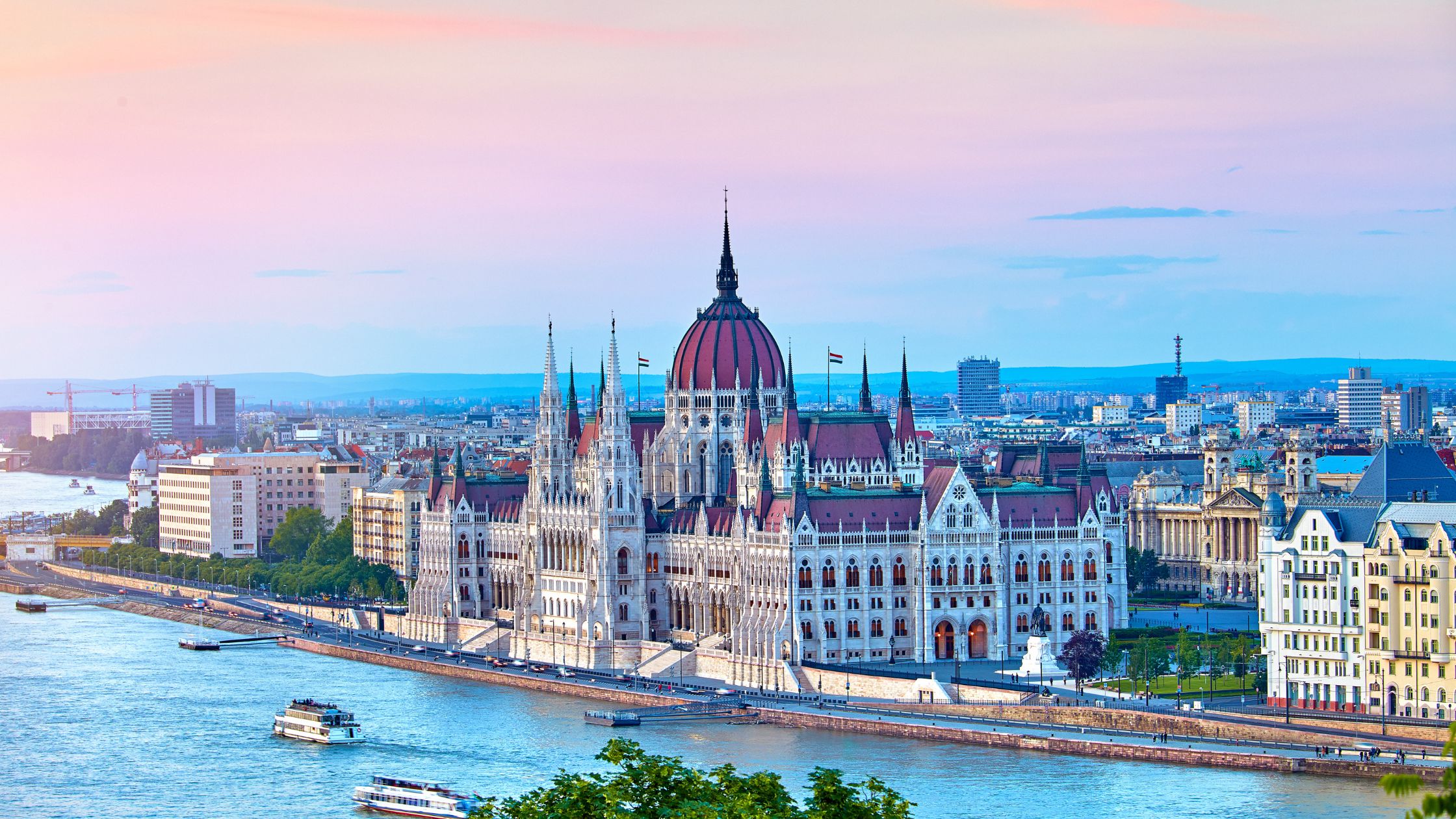
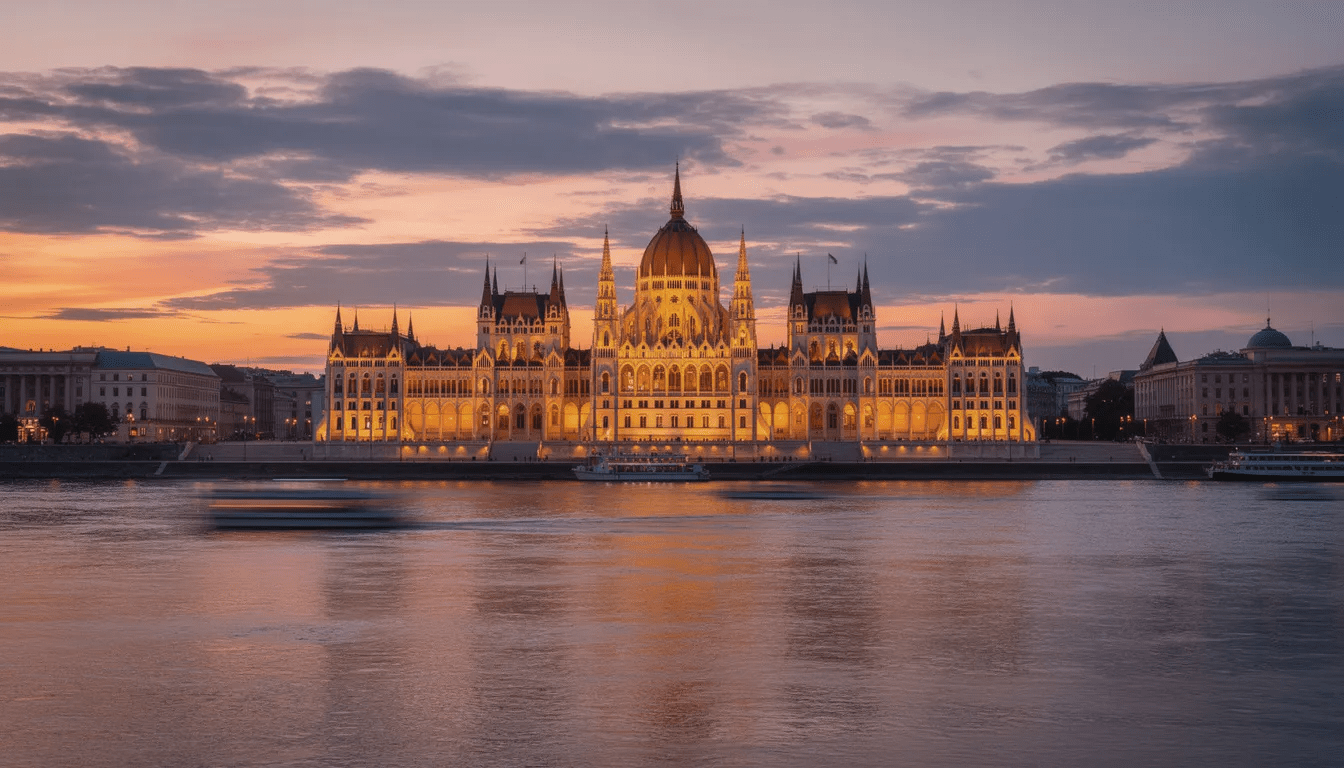
The Hungarian Parliament Building on Kossuth Lajos tér stands as one of Europe’s most photogenic government buildings, and for good reason. Completed in 1902 in Gothic Revival style, this massive structure stretches 691 metres along the riverbank—making it the longest parliament building in Europe. At sunset and after dark, when hundreds of lights illuminate its spires and domes, the effect is genuinely breathtaking.
Best viewing spots:
Cross to the Buda side and head to Batthyány tér tram stop for Parliament reflected in the Danube
Book an evening Danube cruise to see the entire illuminated riverfront from the water
English-language guided tours run daily inside the building, taking you through ornate halls, past the Hungarian Crown Jewels, and into the hexagonal central hall. These tours sell out regularly, so book online at least a few days ahead—especially around holidays and weekends.
After your tour, walk south along the UNESCO-listed Danube Promenade between Elizabeth Bridge and the famous Chain Bridge (Széchenyi lánchíd). This stretch offers cafés, statues commemorating the city’s history, and unobstructed river views. Pack warm, windproof layers: the riverside is noticeably colder and windier than the sheltered streets just a block inland.
Buda Castle Hill and Fisherman’s Bastion at sunset
Castle Hill (Várhegy) rises dramatically above the western bank of the Danube, crowned by Buda Castle and surrounded by cobblestone streets, pastel-coloured houses, and viewpoints that reward photographers at every turn. The easiest way up is the historic funicular from Clark Ádám tér, though buses and walking paths also reach the summit.
Time your visit for late afternoon to experience the castle district as it transforms at dusk. Watch as lights begin twinkling across Pest far below, the Parliament glowing gold against the darkening sky. In winter, with fewer tourists and a dusting of snow on the rooftops, this becomes genuinely magical.
Fisherman’s Bastion (Halászbástya) offers the single best panoramic view over Parliament and the Pest skyline—and it’s free to visit, though some upper terraces charge a small fee during peak daytime hours. Arrive early morning or after sunset to enjoy the viewpoints without paying and without crowds.
Don’t miss Matthias Church (Mátyás-templom) nearby, recognisable by its colourful Zsolnay tile roof that seems almost fantastical against grey winter clouds. The interior is richly decorated and worth a short visit; combination tickets sometimes include tower access for even higher views across the city.
Practical information:
Details | Information |
|---|---|
Funicular price | ~€4 one way |
Best time to visit | 3–4 PM for sunset views |
Fisherman’s Bastion | Free early/late; ticketed midday |
Matthias Church entry | ~€8–10 |
Széchenyi Thermal Bath and City Park (Városliget)
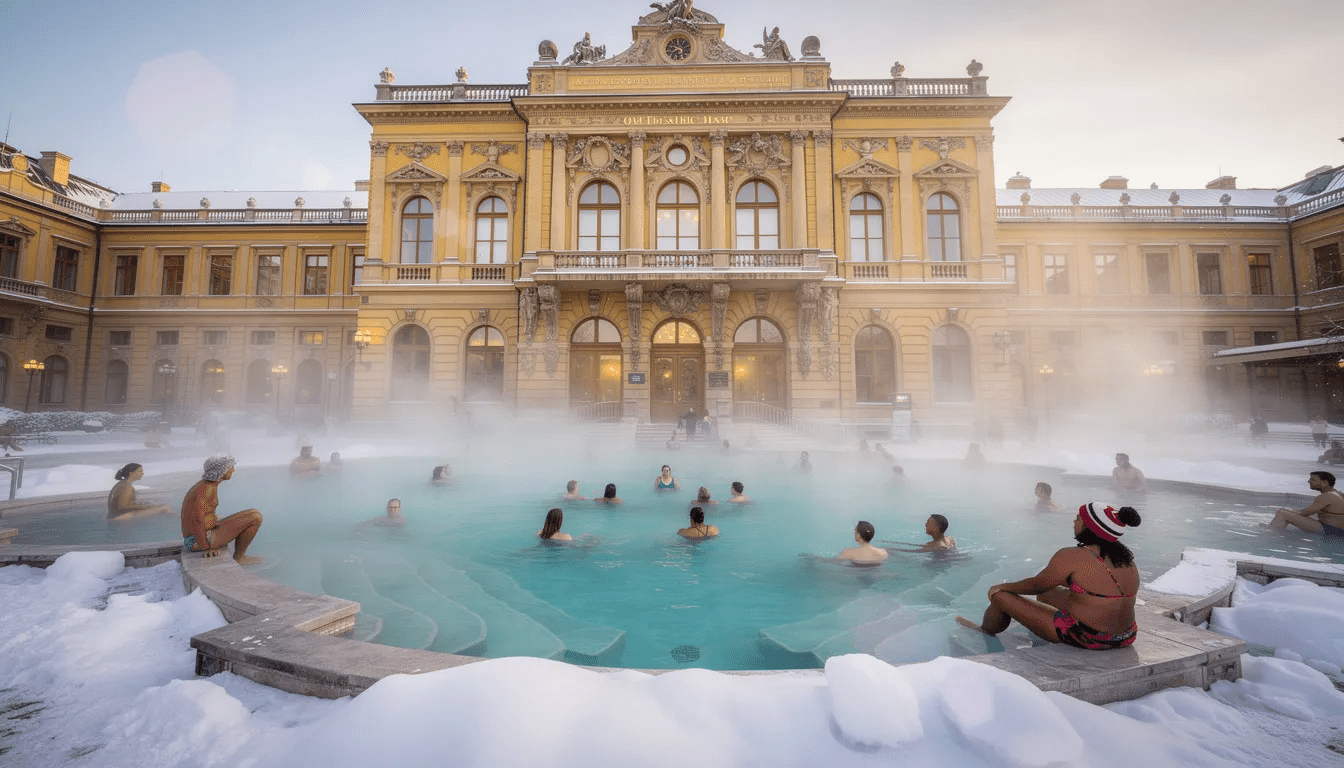
No visit to Budapest is complete without experiencing the thermal baths that have defined this city since Roman Empire times. Széchenyi Baths, housed in a grand yellow neo-baroque building in Városliget (City Park), is the most iconic—and perhaps the most memorable winter experience you’ll have anywhere in Europe.
The outdoor pools maintain temperatures around 38–40°C year-round, meaning you can soak in steaming water whilst the air temperature hovers below freezing. Locals play chess on floating boards, steam rises dramatically against the cold air, and the experience feels like something from another era entirely. This is where Budapest’s thermal tradition truly comes alive.
Visitor tips:
Book your tickets online before arriving, especially on weekends and holidays
Bring flip-flops, a swimsuit, and your own towel to avoid rental fees
Morning visits tend to be calmer; late afternoon draws more locals after work
City Park attractions:
Heroes’ Square (Hősök tere): The grand Millennium monument commemorating 1,000 years of Hungarian history
Vajdahunyad Castle: A fairy-tale castle displaying various Hungarian architectural styles
Ice skating rink: Open late November through February on the park’s lake
Metro line M1 (the Millennium Underground, Europe’s first continental underground railway, established in 1896) runs directly from Deák Ferenc tér to Széchenyi fürdő station—about 8 minutes from the city centre.
Saint Stephen’s Basilica and rooftop views
St. Stephen’s Basilica (Szent István-bazilika) dominates the skyline of central Pest, its massive dome visible from viewpoints across the city. This 19th-century church took over 50 years to complete and now houses one of Hungary’s most important relics: the mummified right hand of King Stephen I, the country’s first Christian king.
The interior rewards careful attention: richly decorated with mosaics, sculptures, and paintings, it represents some of the most beautiful buildings of its era in the country. But the real draw for many visitors is the panoramic rooftop terrace, accessible by lift or stairs. From here, 360° views stretch across Budapest—particularly stunning at winter sunset or after fresh snowfall blankets the rooftops below.
From late November through early January, the Advent Basilica Christmas market transforms the square in front of the church. Each evening, a 3D light show is projected onto the façade, whilst the smell of mulled wine and the sound of traditional music fill the air. If you time your trip right, this alone justifies a winter visit to Budapest.
Visitor tips:
Entry to the church is free; rooftop access costs ~€3–4
Dress modestly for church visits (shoulders and knees covered)
Check Mass times to avoid peak services
The Christmas market runs roughly late November to January 1
Jewish Quarter, ruin bars and street art
District VII (Erzsébetváros) tells two intertwined stories: this is both the historic Jewish Quarter, with synagogues and memorials dating back centuries, and the epicentre of Budapest’s famous ruin bar scene that emerged in the 2000s. Walking these streets, you’ll find history, nightlife, and street art in equal measure.
The Dohány Street Synagogue, built 1854–1859, is Europe’s largest synagogue with seating for 3,000 worshippers. Its museum documents Hungarian Jewish life, whilst the Raoul Wallenberg Memorial Park in the courtyard honours those who perished during WWII. This is an essential stop for understanding the city’s complex past.
Just blocks away, Szimpla Kert pioneered the ruin bar concept that has since spread worldwide. Housed in a crumbling tenement building, it’s filled with mismatched furniture, art installations, and multiple bars across two levels. The atmosphere here is unlike anything in Tallinn—think creative chaos with craft pálinka tastings (around €3 per shot) and live music most nights.
Tips for visiting:
Arrive late afternoon or early evening on weekends before the serious nightlife crowds descend
Respect the residential neighbourhood—keep noise reasonable
Watch your belongings carefully in crowded nightlife spots
Shoes on the Danube Bank memorial
South of Parliament, along the river’s edge, stands one of Budapest’s most quietly powerful memorials. Sixty pairs of iron shoes—1940s-style men’s, women’s, and children’s footwear—line the embankment, a permanent reminder of the Jews who were shot into the Danube by Arrow Cross militiamen during 1944–1945.
This is a place for reflection, not photography. Even on busy days, visitors tend to fall silent here, the weight of history palpable in the air. In winter, grey light, mist rising from the river, and low clouds often intensify the emotional impact, making this a profound experience during off-season visits.
Important notes:
Treat the site with appropriate respect—no climbing into the shoes or posing inappropriately
Many visitors leave flowers or small stones in the Hungarian Jewish tradition
Combine this stop with a Parliament walk to understand how the city remembers and honours its destroyed communities
The memorial serves as an important reminder of Hungary during WWII, a chapter of history that shaped the neighbourhoods and demographics of Budapest in ways still visible today. Understanding this history adds depth to everything else you’ll discover in the city.
Szentendre and the Danube Bend day trip

Sometimes the best way to appreciate a city is to leave it briefly. Szentendre, a colourful artists’ town about 30 minutes north of Budapest by H5 suburban train from Batthyány tér, offers exactly that kind of perspective—plus a charming half-day escape even in the depths of winter.
Cobbled lanes wind between baroque church spires, small galleries display local art, and cosy cafés provide refuge from the cold with excellent coffee and hot chocolate. The Serbian Orthodox churches here reflect the town’s diverse heritage, with interiors featuring icons and decorated altarpieces worth discovering.
Getting there:
Take Metro M2 to Batthyány tér
Transfer to the H5 suburban train (HÉV) direction Szentendre
Ride to the end station (about 40 minutes)
Walk 5 minutes into the town centre
In warmer months, many organised tours combine Szentendre with Esztergom (Hungary’s religious capital) and Visegrád fortress, sometimes returning by boat along the scenic Danube Bend. Winter simplifies things: the H5 train runs year-round (tickets approximately €3–4 each way), and the reduced crowds mean you can wander the streets calmly without the summer tourist crush.
Aquincum and Budapest’s Roman heritage
Most visitors never realise that Budapest’s history stretches back nearly two millennia to a thriving Roman settlement. Aquincum, located in Óbuda in the north of the modern city, was established around AD 89 as the capital of the Roman province of Lower Pannonia. At its peak, tens of thousands of people lived within its walls.
Today, the open-air ruins reveal amphitheatre remains, bath complexes, and ancient streets—a tangible connection to the Roman Empire that once extended this far into Central Europe. A small but well-designed museum showcases mosaics, everyday objects, and reconstructions that help visitors imagine life here nearly 2,000 years ago.
The name Aquincum itself derives from “aqua,” reflecting the abundant thermal springs that attracted Roman settlers—the same waters that still feed Budapest’s famous baths today. This continuity across millennia gives the thermal bath experience added meaning.
Practical information:
Winter visitors should dress warmly for the outdoor sections
Check seasonal opening hours before making the trip
Getting there: Take the HÉV train from Batthyány tér towards Szentendre, getting off at Aquincum station
Alternatively, tram 1 from the centre reaches nearby stops
Journey time: approximately 25–30 minutes
Getting lost amongst Budapest’s eclectic architecture
Sometimes the best discoveries come without a plan. Set aside at least half a day to walk without a strict itinerary through central Pest, letting the streets reveal their architectural treasures organically.
Start on Andrássy út, the grand boulevard that stretches from the city centre to Heroes’ Square. This UNESCO-listed avenue showcases:
Neo-Renaissance townhouses
The Hungarian State Opera (worth booking tickets for an evening performance)
Elegant cafés that have served writers and artists for over a century
Architectural highlights:
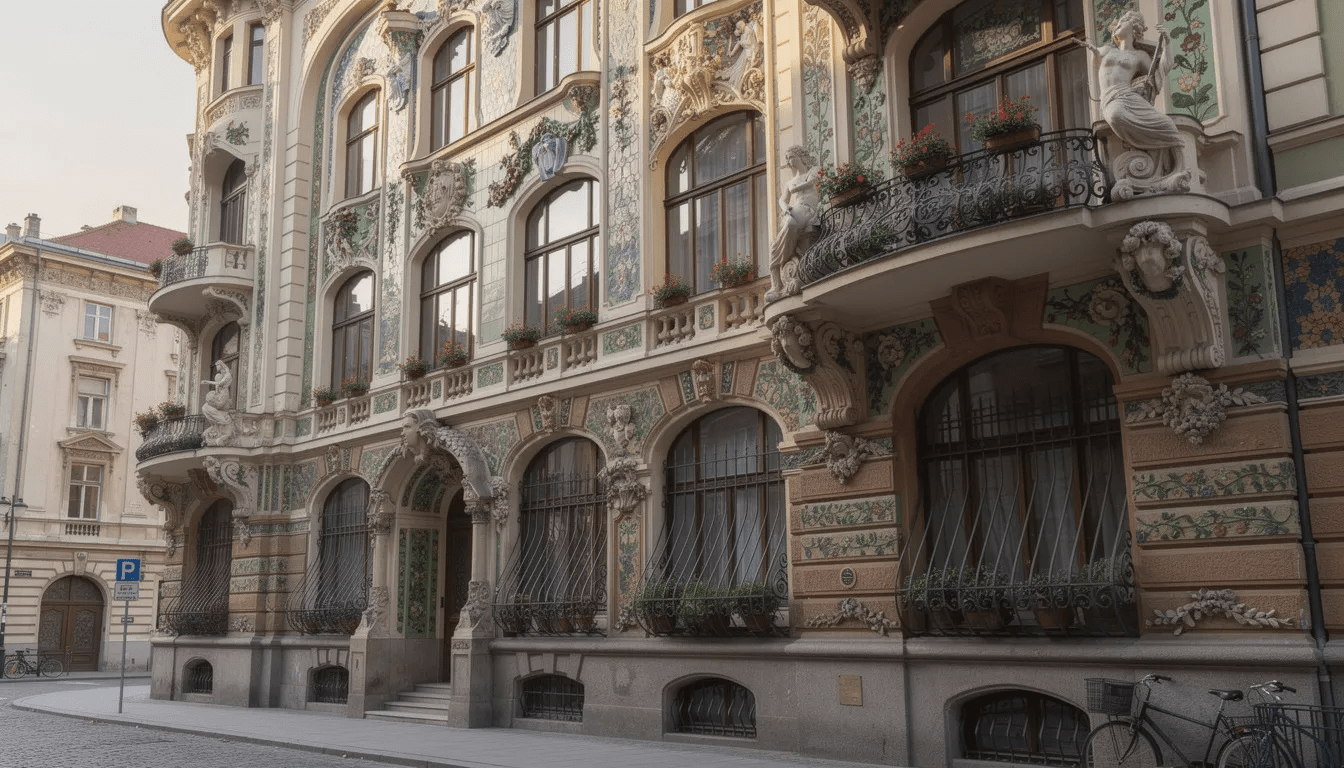
Art nouveau (Hungarian “szecesszió”) buildings with colourful Zsolnay tiles and organic, flowing forms
Grand 19th-century apartment blocks with ornate balconies and carved doorways
Renovated palaces now housing hotels, restaurants, and cultural institutions
Hidden courtyards behind unremarkable street façades, revealing unexpected beauty
Specific streets worth exploring:
Liszt Ferenc tér (lined with cafés and bars)
Neighbourhoods between Andrássy and the Grand Boulevard (körutak)
Side streets of Districts VI and VII where other buildings of remarkable beauty wait around every corner
In winter, early sunsets and decorative lighting transform evening walks into something special. After an afternoon in the thermal baths, there’s no better way to spend the remaining light than wandering these streets, camera in hand, discovering why Budapest earned its “Paris of the East” nickname.
When to visit Budapest from Tallinn
Budapest rewards visitors year-round, but understanding the seasonal rhythms helps you plan the trip that best matches your interests and budget.
January and early February:
Cheapest flights and accommodation prices, especially in the weeks after New Year
Temperatures around freezing with shorter daylight hours
Fewer tourists, lower Booking.com rates, and a more authentic local atmosphere
Peak periods (higher prices):
December Advent markets (especially weekends)
Easter weekend
May through September city-break season
For Estonians accustomed to Tallinn winters, Budapest’s climate feels almost mild. Winter temperatures typically range from -1°C to +5°C—warmer than home, with less snow and more sunshine. Summer can push past 30°C, making the thermal baths feel less appealing and outdoor sightseeing more tiring.
Best times for budget-conscious culture seekers:
Late November–early December: Christmas lights without peak prices
January–March: Lowest costs, manageable weather
Late March–April: Spring awakening, shoulder-season rates
Budapest winter magic: Christmas markets and culture
From late November through early January, Budapest transforms into one of Europe’s most enchanting Christmas destinations. The main markets on Vörösmarty tér and at St. Stephen’s Basilica draw hundreds of thousands of visitors, yet they retain a warmth and authenticity that larger German markets sometimes lack.
Traditional treats:
Kürtőskalács (chimney cake) freshly baked over charcoal
Mulled wine in ceramic cups you can take home
Roasted chestnuts warming cold hands
Hungarian handicrafts including embroidered textiles and hand-painted ceramics
The smells alone—cinnamon, roasting nuts, wood smoke—create an atmosphere impossible to replicate elsewhere.
Indoor winter attractions:
Venue | What to expect | Approx. cost |
|---|---|---|
Hungarian State Opera | Verdi, Strauss, ballet performances | €15–100 |
National Gallery (Buda Castle) | Hungarian art from medieval to modern | €8–12 |
Museum of Fine Arts (Heroes’ Square) | European masters, Egyptian collection | €8–10 |
New York Café | “World’s most beautiful café” experience | €5–10 for coffee |
During Advent weekends, book your hotels via Booking.com well in advance. Central accommodation near the markets fills quickly, and prices rise accordingly. Midweek stays typically cost less and feel more relaxed.
How to get to Budapest from Tallinn
Flying is by far the easiest option connecting Tallinn to Budapest. No direct trains exist, and the bus journey would consume the better part of two days—hardly practical for a city break.
Tallinn Airport (TLL) offers both direct and one-stop connections to Budapest Ferenc Liszt International Airport (BUD). Common routing hubs include Riga, Helsinki, and Warsaw. Airlines operating these routes include airBaltic, Wizz Air, Finnair, and LOT Polish Airlines, with seasonal services occasionally expanding the options.
Tips for finding affordable flights:
Monitor fares 2–3 months before your intended travel dates
Stay flexible with departure days—midweek flights often cost significantly less
Consider flying out on Thursday and returning on Monday for lower fares
Sign up for fare alerts from comparison sites
Check both Tallinn and Helsinki departure options if prices seem high
Total journey time including a short connection typically runs 4–6 hours—manageable even for a long weekend. Early morning departures from Tallinn can have you exploring Budapest by lunchtime.
Tallinn Airport itself makes this easy: located just 4 km from the city centre with tram line 4 connecting directly, you can leave your home and be through security in well under an hour. Online check-in the night before eliminates morning queues.
From Budapest Airport to the city centre
Budapest Ferenc Liszt International Airport sits approximately 16 km southeast of the city centre—close enough for affordable transfers, far enough to require some planning.
Transfer options:
Option | Journey time | Cost | Best for |
|---|---|---|---|
100E Airport Bus | 30–40 min to Deák Ferenc tér | ~€3 | Budget travellers |
Bus 200E + Metro M3 | 45–60 min | ~€2 | Off-peak arrivals |
Official taxi | 25–40 min | ~€25–35 fixed rate | Late night, groups |
Pre-booked shuttle | 30–45 min | ~€15–20 | Convenience, door-to-door |
The 100E express bus runs every 20–30 minutes and delivers you directly to Deák Ferenc tér, the central hub where all three metro lines intersect. This is the simplest option for most visitors.
Have some Hungarian forints ready or ensure your bank card works in ticket machines (most accept contactless payments). Budapest uses its own currency, though many places accept euros at slightly unfavourable rates.
When selecting accommodation on Booking.com, prioritise properties near Deák Ferenc tér, Astoria, or Nyugati station. These locations make airport transfers simple and keep you within walking distance of major attractions.
Where to stay in Budapest (using Booking.com)
Booking.com remains the easiest platform for Estonians to compare and book accommodation in Budapest. With over 10,000 properties listed—from budget hostels at €20 per night to luxury thermal spa hotels at €150+—you’ll find options matching any budget and preference.
Understanding the geography:
Buda (west bank): Quieter, residential, hilly with castle views
Pest (east bank): Flat, lively, where most hotels, restaurants, and attractions cluster
For first-time visitors, Pest typically makes more sense. You’ll spend less time on public transportation, have more dining options at your doorstep, and find it easier to walk between sights.
Booking tips for Budapest:
Choose flexible cancellation rates outside peak periods
Read recent reviews carefully, noting comments about heating (winter) or air conditioning (summer)
Check if breakfast is included—it often adds significant value
Look for Genius discounts if you’re a regular Booking.com user (10–15% savings)
Filter by guest review scores above 8.0 for consistently good experiences
Best areas for a first visit
District V (Belváros/Lipótváros)
The most central district encompasses Parliament, the Danube embankment, and major sights like St. Stephen’s Basilica. Hotels here tend to cost more but eliminate transportation needs—everything is walkable. Ideal for short stays and first-time visitors who want to maximise sightseeing time.
District VI (Terézváros)
Stretching along Andrássy út, this elegant area offers excellent cafés, the State Opera, and reliable metro access (M1 line). Prices run slightly lower than District V whilst keeping you connected to everything. Great for culture-focused travellers.
District VII (Jewish Quarter)
The nightlife epicentre surrounding Szimpla Kert and the synagogue. Expect the liveliest streets, best street food, and most entertainment options—but also more noise at night. Light sleepers should request courtyard-facing rooms or choose a different district.
Winter-specific advice: Prioritise accommodation within 5–10 minutes’ walking distance of metro stations like Deák Ferenc tér or Oktogon. When temperatures drop and wind whips along the Danube, you’ll appreciate minimising outdoor transit time.
Accommodation types to consider:
Romantic boutique hotels in renovated historic buildings
Budget hostels with private rooms for solo travellers
Family apartments with kitchens near major squares
Budapest on an Estonian budget
Here’s welcome news for travellers from Tallinn: daily costs in Budapest run noticeably lower than at home. Food, public transportation, and many attractions cost 20–40% less, stretching your trip budget further than you might expect.
Daily budget estimates:
Budget level | Accommodation | Meals | Activities | Daily total |
|---|---|---|---|---|
Backpacker | €20–35 hostel | €15–20 | Free/cheap sights | €40–60 |
Comfortable | €60–100 hotel | €30–45 | 1–2 paid attractions | €100–150 |
Relaxed | €100–150 hotel | €50–70 | Spa + culture | €170–250 |
Free and cheap attractions:
Walking the Danube promenade and crossing the Chain Bridge
Viewpoints on Castle Hill (Fisherman’s Bastion free early/late)
Many churches including St. Stephen’s Basilica (interior free)
Street art hunting in the Jewish Quarter
Parks and the ruins of Budapest’s layered history
Public transport passes deliver excellent value for active sightseers:
24-hour pass: ~€5
72-hour pass: ~€12
7-day pass: ~€18
These cover unlimited travel on metro, trams, buses, and trolleybuses—essential if you’re moving between Buda, Pest, and City Park throughout your stay.
Lock in accommodation prices early through Booking.com, especially for popular weekends. The difference between booking three months ahead versus three weeks can easily reach 30–40% during peak periods.
Is Budapest cheap to visit?
Let’s be honest: Budapest is no longer the ultra-budget destination it was a decade ago. Prices have risen, particularly in tourist-heavy areas. However, it still offers remarkable value compared to Western European capitals like London or Berlin—and even compared to Tallinn.
Typical prices (2024):
Café coffee: €2–3 (€5+ at famous spots like New York Café)
Main dish, mid-range restaurant: €10–15
Craft beer/wine glass: €3–5
Thermal bath entry: €20–30
Major museum entry: €8–15
Money-saving strategies:
Eat at lunchtime: Many restaurants offer menü deals (set lunch) for €6–8
Choose bakeries and markets: Great Central Market Hall offers cheap, filling meals
Use trams and metro: Taxi costs add up quickly; public transport doesn’t
Limit paid attractions to one per day: Alternate with free sights and walking
Book thermal baths for weekday mornings: Sometimes cheaper and always less crowded
Bring your own towel and flip-flops to spas: Save €5–10 in rental fees
A long weekend from Tallinn—including flights, three nights of accommodation, meals, a thermal bath visit, and a few attractions—can absolutely stay under €400–500 if you plan ahead and make smart choices.
What to eat and drink in Budapest
Hungarian cuisine was built for cold weather. Rich, paprika-spiced, and deeply satisfying, it offers exactly what you need after hours of walking winter streets or soaking in thermal waters. For Estonians accustomed to hearty Nordic fare, the flavours will feel comfortingly familiar in spirit whilst offering something distinctly new.
Traditional restaurants (csárdas) serve the classics in generous portions, but the city’s dining scene has evolved dramatically. Modern Hungarian cuisine, vegetarian options, and international restaurants now flourish alongside the old-school establishments, particularly in the Jewish Quarter and around Liszt Ferenc tér.
Budget eating tips:
Local markets (especially the Great Market Hall) offer cheap, authentic food
Look for lunch deals (ebéd menü) at traditional restaurants
Bakeries sell savoury pastries for €1–2
Fair warning: portions tend toward enormous, and dishes often arrive swimming in paprika-infused sauces. Plan accordingly—especially if you’re heading to a spa session afterwards.
Must-try Hungarian dishes and winter treats
Savoury essentials:
Gulyás (Goulash): Despite what you might think, this is a soup, not a stew—beef, vegetables, and potatoes in paprika-rich broth. Perfect on cold days.
Lángos: Deep-fried flatbread typically topped with sour cream and grated cheese. Street food available near baths and at markets.
Paprikás Csirke: Chicken in creamy paprika sauce served with nokedli (small dumplings). Comfort food at its finest.
Lecsó: Pepper and tomato stew, often with sausage added. Summer vegetable dish that appears year-round.
Kolbász: Hungarian sausages in various styles, often grilled and served with mustard and fresh bread.
Sweet treats:
Kürtőskalács: Spiral-shaped chimney cake baked over charcoal, often coated with cinnamon, nuts, or chocolate. Ubiquitous at Christmas markets.
Dobos torta: Layered sponge cake with chocolate buttercream and caramel top.
Flódni: Jewish-Hungarian pastry with layers of apple, walnut, and poppy seed. Find it in bakeries around the Jewish Quarter. For tips on enjoying these treats and more while traveling on a budget, check out 12 советов по экономии в отпуске: дешевые трюки, которые помогут вам сэкономить 100 евро | MoneyHub.
Drinks to try:
Tokaji wine: Famous sweet whites from the Tokaj region—perfect after dinner
Kékfrankos: Robust Hungarian red wine, excellent with meat dishes
Unicum: Bitter herbal digestif, an acquired taste but worth trying once
Pálinka: Fruit brandy in many varieties (apricot, plum, cherry). Sip slowly—it’s typically 40%+ alcohol.
How many days to spend in Budapest and sample itineraries
Three full days in Budapest hits the sweet spot for a first visit from Tallinn. You’ll have time to experience both Buda and Pest, enjoy a proper thermal bath session, and still leave room for unhurried café breaks and spontaneous discoveries. Two days works as a minimum, whilst 4–5 days allows for day trips and deeper exploration.
The itinerary below keeps walking distances reasonable and builds in time for warmth—whether in a café, museum, or steaming spa pool. Winter days in Budapest can feel short, with sunset arriving around 4 PM in December, so plan outdoor activities for the brightest hours.
Book centrally located accommodation on Booking.com so you can easily return to your room for a midday rest or to warm up between sightseeing blocks. This flexibility makes winter travel far more enjoyable.
3-day Budapest itinerary from Tallinn
Day 1: Arrival and Danube discovery
Morning/early afternoon: Fly from Tallinn, arrive Budapest
Check into your hotel in District V or VI
Afternoon: Stroll the Danube Promenade from Chain Bridge to Parliament
Cross to Buda side via Chain Bridge, walk to Batthyány tér for Parliament views at sunset
Evening: Dinner in District V, perhaps near Vörösmarty tér; visit the Christmas market if in season
Day 2: Buda Castle and Jewish Quarter
Morning: Take the funicular to Castle Hill, explore Fisherman’s Bastion and Matthias Church
Lunch: Traditional Hungarian restaurant in Buda or back across the river
Afternoon: Jewish Quarter walking tour—Dohány Street Synagogue, street art, Szimpla Kert
Evening: Ruin bar hopping or dinner in District VII; try the local nightlife scene
Day 3: Thermal baths and farewell
Morning: Széchenyi Baths in City Park—arrive when doors open for calmer pools
Late morning: Heroes’ Square and Millennium Monument, quick walk through City Park
Lunch: Near Andrássy út or back in central Pest
Afternoon: St. Stephen’s Basilica and rooftop views; last-minute shopping on Váci Street
Evening: Farewell dinner at a special restaurant; late flight back to Tallinn or overnight stay
Winter flexibility: Check the weather forecast and swap days if needed. Save indoor museums and galleries for cold, wet days; take advantage of any sunshine for outdoor walks and viewpoints.
Flight timing tip: Book early-morning departures from Tallinn and late-evening returns from Budapest to maximise your time on the ground. Even a Friday afternoon departure and Sunday night return gives you meaningful exploration time.
Getting around Budapest
Budapest’s public transportation ranks amongst the best in Europe—efficient, affordable, and extensive enough to reach every major attraction. For visitors, understanding the basics eliminates stress and saves both time and money.
Key transit lines:
Metro M1 (Yellow line): Historic route along Andrássy út to City Park/Széchenyi Baths
Trams 4 and 6: Circle the Grand Boulevard, connecting major Pest neighbourhoods
Tram 2: Scenic riverside route along the Pest embankment
Buses and trolleybuses: Fill in the gaps, especially in Buda’s hilly terrain
Ticket options:
Type | Price | Best for |
|---|---|---|
Single ticket | ~€1.50 | One or two rides total |
24-hour pass | ~€5 | Full day of sightseeing |
72-hour pass | ~€12 | Intensive 3-day exploration |
7-day pass | ~€18 | Week-long stays |
Always validate tickets before riding—plain-clothes inspectors issue on-the-spot fines to fare evaders.
Central Budapest remains highly walkable, with most District V attractions within 20 minutes of each other on foot. However, winter ice and occasional snow can make cobblestones and hills slippery. Bring shoes with good grip, especially if you plan to explore Castle Hill on foot.
For late nights or particularly cold weather, licensed taxis and ride-hailing apps provide reliable alternatives. Use established companies like Főtaxi or Bolt rather than accepting rides from drivers who approach you directly. Always confirm the fare estimate before departing.
Why Budapest is a perfect match for Estonian travellers
Standing back and considering the full picture, Budapest emerges as an almost ideal destination for travellers from Tallinn. The connections are easy—a short flight puts you in another world. The costs are lower—your money stretches further here than in almost any other major European capital. And the experiences on offer feel genuinely different from what you find at home.
Both cities sit on water with historic centres that have survived centuries of change. But where Tallinn charms with medieval intimacy, Budapest impresses with Habsburg-era grandeur. Where Estonia offers sauna traditions, Hungary counters with thermal baths fed by volcanic springs. The scale here—Parliament’s endless corridors, the sweeping Danube views, the ornate coffeehouse interiors—rewards visitors who want to feel the weight of history around them.
This is a city close enough for a spontaneous long weekend but rich enough to fill a week, or to draw you back season after season. The Christmas markets and steaming thermal pools of winter. The outdoor café terraces of spring. The riverside promenades of summer. Each visit reveals new layers.
So open your calendar, check current Tallinn–Budapest flight options, find your ideal base—whether a charming boutique hotel near the Basilica, a modern apartment in the Jewish Quarter, or a spa hotel with direct thermal bath access.
Picture yourself in a few weeks’ time: steam rising around you in the outdoor pools at Széchenyi as twilight settles over City Park, or Parliament glowing golden across the Danube as you walk the riverside promenade, mulled wine warming your hands. That experience is waiting. All you need to do is book your trip.
Don’t forget your travel insurance!